Every winter I get calls from teachers, student council advisors and PTO parents who just found out the dance is theirs. They have a date, a theme and a gym, and they want to know what they actually need for sound.
A school dance is not hard to get right, but the gym works against you. Here's what I look at every time.
The Gym Is the Hardest Room in the Building
A gym is a big box of hard walls, a hard floor and a high ceiling. Sound bounces off all of it. Turn the music up in a room like that and it doesn't get clearer, it gets muddy, and the kids on the far side of the floor hear mostly echo.
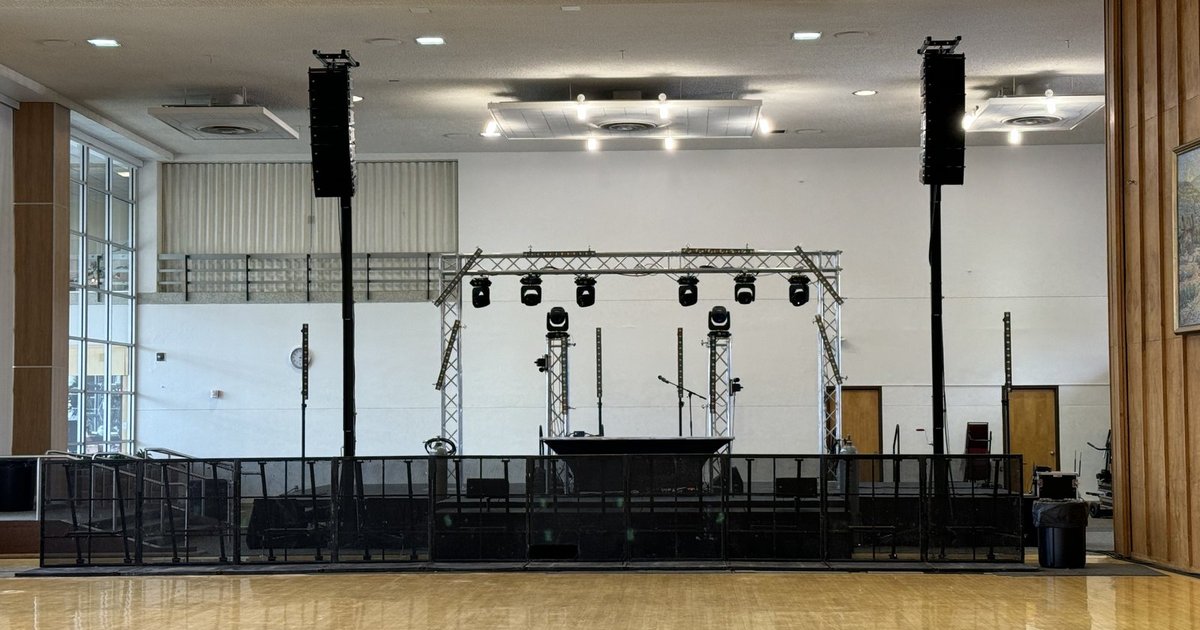
What fixes it is where the speakers sit, not how loud they go. Put them up high on stands on each side of the floor and point them down at the dancers. Then the sound lands on the people and less of it hits the walls first. That's what you see in the photo above: two tall speakers on each side, aimed at the floor, not at the bleachers.
One more thing about speaker placement. Two sets of speakers in two corners of the gym usually sound worse than one good pair at the front, because the sound from each set arrives at different times. I wrote about why two stacks sound worse than one if you want the long version.
The Announcements Need Their Own Plan
Somewhere in the night somebody takes the mic. A welcome, the rules, the king and queen, the last song. That's the part the school cares about most, and it's the part that goes wrong when the mic is an afterthought.
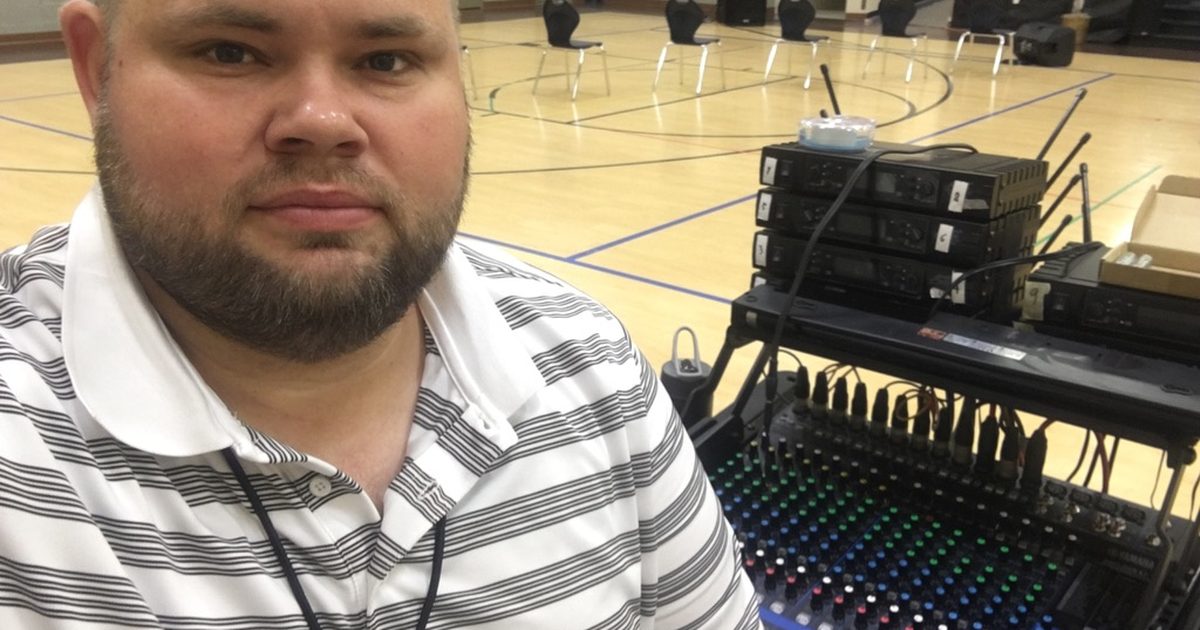
Use a wireless handheld mic, have the person talk from in front of the speakers, not behind them, and have somebody ready to bring the music down when they start. If the mic squeals, it's usually because the person holding it walked in front of a speaker. My post on how to stop feedback covers what to do in the moment.
Ask How the Music Gets Kept Clean
Every school asks for clean music, and every school means it. Ask whoever you hire how they handle it: clean edits of the songs, what they do with requests, and what happens when a student hands them a phone with a song on it. You want a plan before the night, not an argument at the DJ table.
Lights Change the Room More Than You'd Think
A gym with the house lights on still feels like a gym. Turn those off, add a few moving lights over the DJ and some color on the walls, and it feels like an event. Students dance in a dark room. They stand along the wall in a bright one.
Talk with the school about which lights can go off and which have to stay on for safety. Exit signs stay lit, and most schools want a few lights on near the doors.
Load-In Time Matters More Than People Plan For
The gym usually has practice in it until a few hours before the dance. Sound and lights for a full gym take time to set up and test, so ask the activities office when the room is free, and when it has to be empty again afterward. A late load-in means a rushed setup, and a rushed setup is where the problems start.
While you're asking, find out where the power is. A gym has outlets on more than one circuit, and the custodian usually knows which ones.
If the Building Has to Stay Quiet
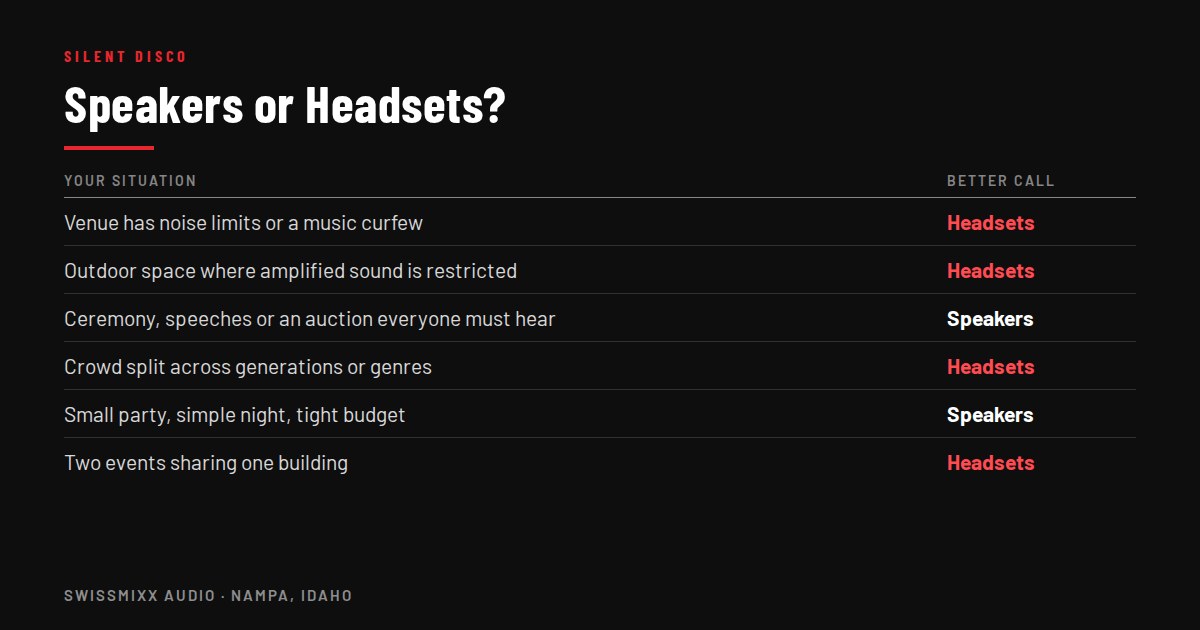
Sometimes the dance shares the building with something else, or the school wants a quieter space for the students who came to talk. A silent disco solves both. Every student wears a headset, the dance floor can be as loud as they want, and the hallway stays quiet. Silent disco starts at $850 for 100 headsets.
Six Things to Have Ready When You Call
Whoever you call, these answers get you a real number fast:
- The date and the school.
- Which room: the main gym, the auxiliary gym or the commons.
- A rough headcount.
- Start and end time, and when the room is free for setup.
- The announcements you're planning: welcome, court, last dance.
- The theme, if lighting colors matter to you.
Winter formal and prom dates bunch up on the same few weekends. If yours is set, ask early. I wrote more about how far ahead to book event sound, and you can start planning the night on my school dance planner.