Ask ten vendors how far in advance you should book and you'll get ten versions of “as early as possible.” That answer serves the vendor more than it serves you. The honest answer is that different events book on completely different clocks, and knowing which clock yours is on matters more than any single number.
So here's each one, from the longest runway to the shortest, and what actually eats the time.
| The event | Comfortable lead time | What's really driving it |
|---|---|---|
| Large conference, gala, or multi-day corporate event | 6 to 8 weeks | Sound, video, lighting and crew have to arrive as one coordinated unit, and wireless frequencies get coordinated before doors. |
| School or community theater run | When performance dates are set | Every production in the area wants wireless mics during the same few weeks of the season. |
| Wedding | When your date and venue are locked | A peak-season Saturday is one booking. Whoever asks first gets it. |
| DIY rental kit or bare gear | About a week ahead | Safe most of the year. Graduation season, June weddings and the holidays book out. |
| An event this week | Today | Open dates happen. Asking costs nothing, and you'll know fast. |
Why the Big Events Need Six to Eight Weeks
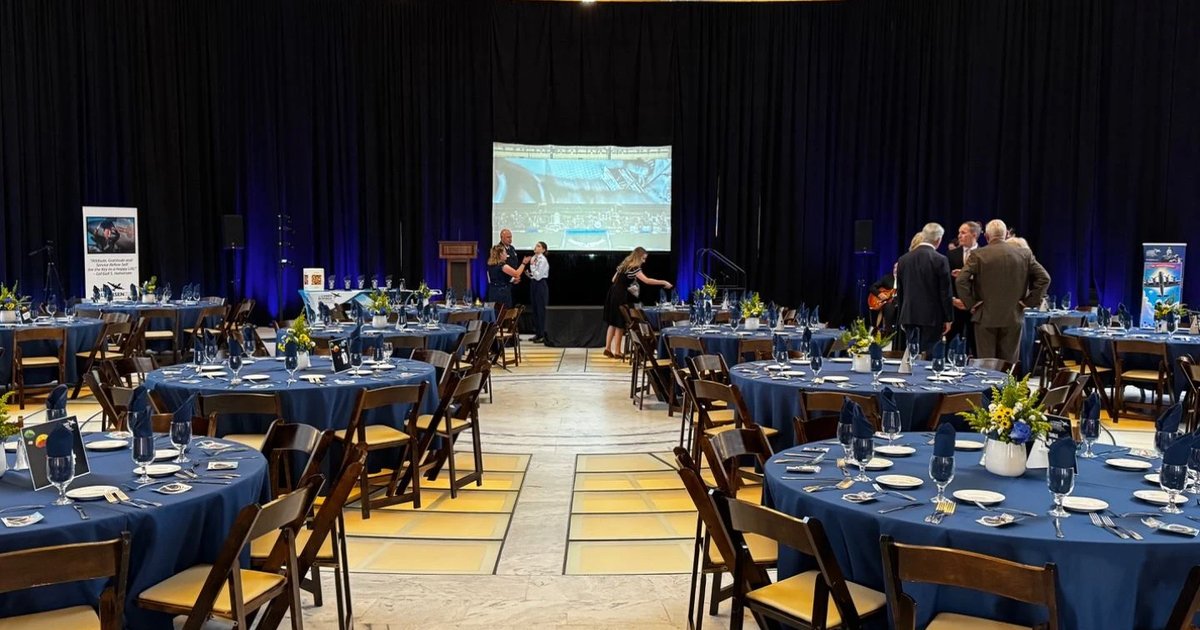
For large conferences, galas and multi-day events, I recommend reaching out at least six to eight weeks ahead. That's not padding. A show with a long wireless list needs its frequencies coordinated before doors open, crew needs to be scheduled, and big venues have their own clocks: loading dock windows, paperwork, power questions that need answers before load-in day. None of that is hard, but all of it is sequential, and six to eight weeks is what lets it happen in order instead of in a panic.
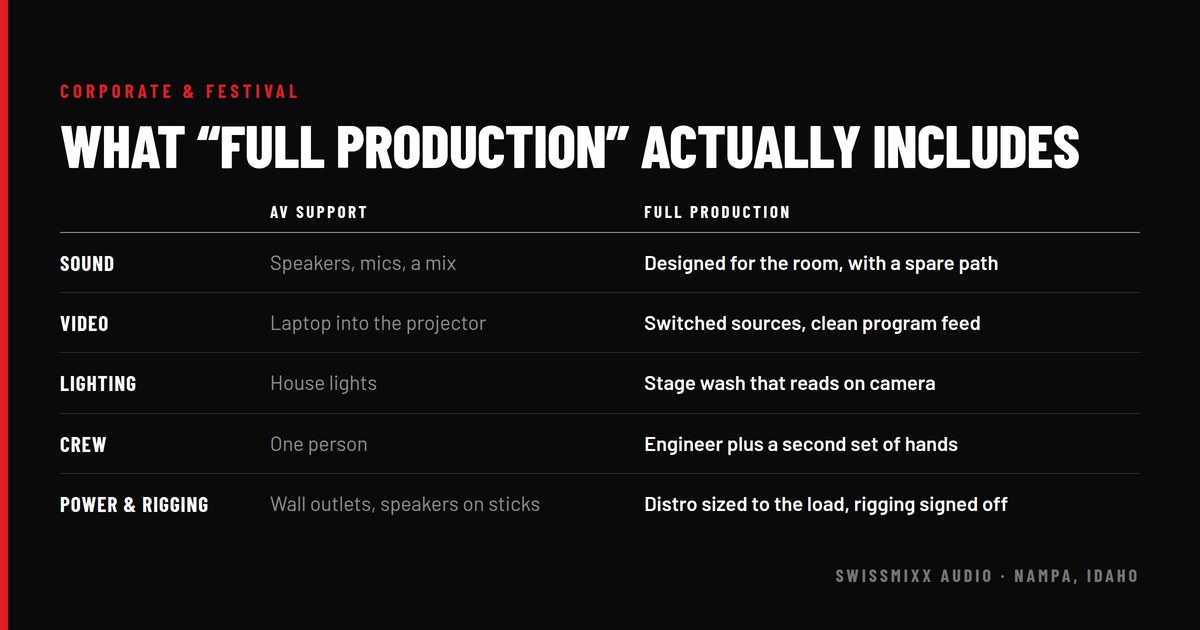
Smaller corporate meetings and presentations are a different animal. A podium mic, a lav for the presenter and sound for a slide deck can often come together on much shorter notice. The long runway is for events where sound, video, lighting and crew all have to show up as one coordinated unit.
Theater: Book When the Show Is Announced
School and community theater runs on a season everyone shares. When one school hits tech week for the spring musical, so does the next one, and wireless mic systems are the thing everybody runs out of at the same time. The flat educational rate is $245 per channel for the run of your show, 4 channel minimum, up to 14 days from tech week through closing night. The moment performance dates land on the school calendar is the moment to reserve channels.
Weddings: The Date Is the Whole Game
Wedding booking advice usually comes as a number of months, and I think that misses the point. A peak-season Saturday is one booking. One. Whoever asks for it first gets it, whether they asked fourteen months out or four. So the real rule is simpler: once your date and venue are locked, start lining up your vendors, because the thing that runs out isn't time, it's that specific Saturday.
Off-peak dates are far more forgiving. A Friday in February has room that a Saturday in June does not. If you're still working out the budget side, I wrote up what a wedding DJ actually costs in the Treasure Valley, which is the other half of this conversation.
Rental Gear: A Week Is Comfortable
For DIY kits and bare gear out of the Nampa shop, a week ahead is safe most of the year. The exceptions repeat annually: graduation season, June weddings and the holidays, when specific items book out. If your event lands in one of those stretches, grab your date early.
One timing detail people miss: a weekend rental is a Friday pickup and a Monday return. So if your event is Saturday, the conversation needs to be done by Friday, not Saturday morning. Build your week around that and the rest is easy.
Have a date in mind already? Send it over with a rough headcount and I'll tell you what it would take.
Get a QuoteBooking Late Is Not a Character Flaw
Plenty of real events come together in under two weeks. A venue falls through and the backup venue needs sound. The band's PA dies. Somebody realizes on Tuesday that 200 people can't hear one battery speaker on Saturday. These are normal calls, not embarrassing ones.
Sometimes the date is open and sometimes it isn't, and the only way to find out is to ask. The worst outcome of asking is a no, a quote costs nothing, and nothing gets booked until you say so. What I'd steer you away from is assuming a late date is a lost cause and settling for no sound at all, because that outcome is worse than any version of the phone call.
What to Have in Hand When You Reach Out
Whatever the event, five things turn an inquiry into a real quote: the date, the city or venue, a rough headcount, whether anyone is speaking into a mic, and indoors or out. That's it. You don't need equipment names or a finished run of show. For rentals specifically, it boils down to three questions, and I've written those down too.
The short version of this whole post: the bigger and more coordinated the event, the earlier you should reach out, and no date is automatically too late. Figure out which clock your event is on, and get on it.