- IDAHO · UTAH · ROTATING INTERNATIONAL LINEUPS
CULTURAL FESTIVAL & INTERNATIONAL STAGE SOUND
A taiko ensemble, a mariachi, a hula halau and a Bhangra troupe can share one stage inside ninety minutes. Every one of them needs a different input list, and none of them get a soundcheck. That is the job, and it is the part most production companies quietly dread.
Straight Answer
Sound for a Stage That Changes Every Twenty Minutes
A cultural festival is not one show. It is fifteen shows in a row, and the gap between them is however long it takes the next group to walk on. One act is nine acoustic instruments with no pickups. The next is four dancers and a track on somebody's phone. The one after that is a drum ensemble that will pin every meter you own. A mixing engineer who has done this builds a scene per act before the day starts, labels every input, and makes the changeover look like nothing happened.
Changeover
Under 2 min
Scenes Built
One per act
Inputs On Hand
32 ch
On the Console
All day
Festivals, arts councils and university programs: tell me the running order and I will tell you what it needs. See live event sound for main-stage and large-format work.
Nobody Gets a Soundcheck
The Hard Part Is Not the Loud Part
Main-stage rock is a solved problem. A cultural stage is not, because almost nothing about it repeats. Here is what actually goes wrong, and what it takes to keep it from going wrong on your event.
Instruments That Have Never Been Mic'd
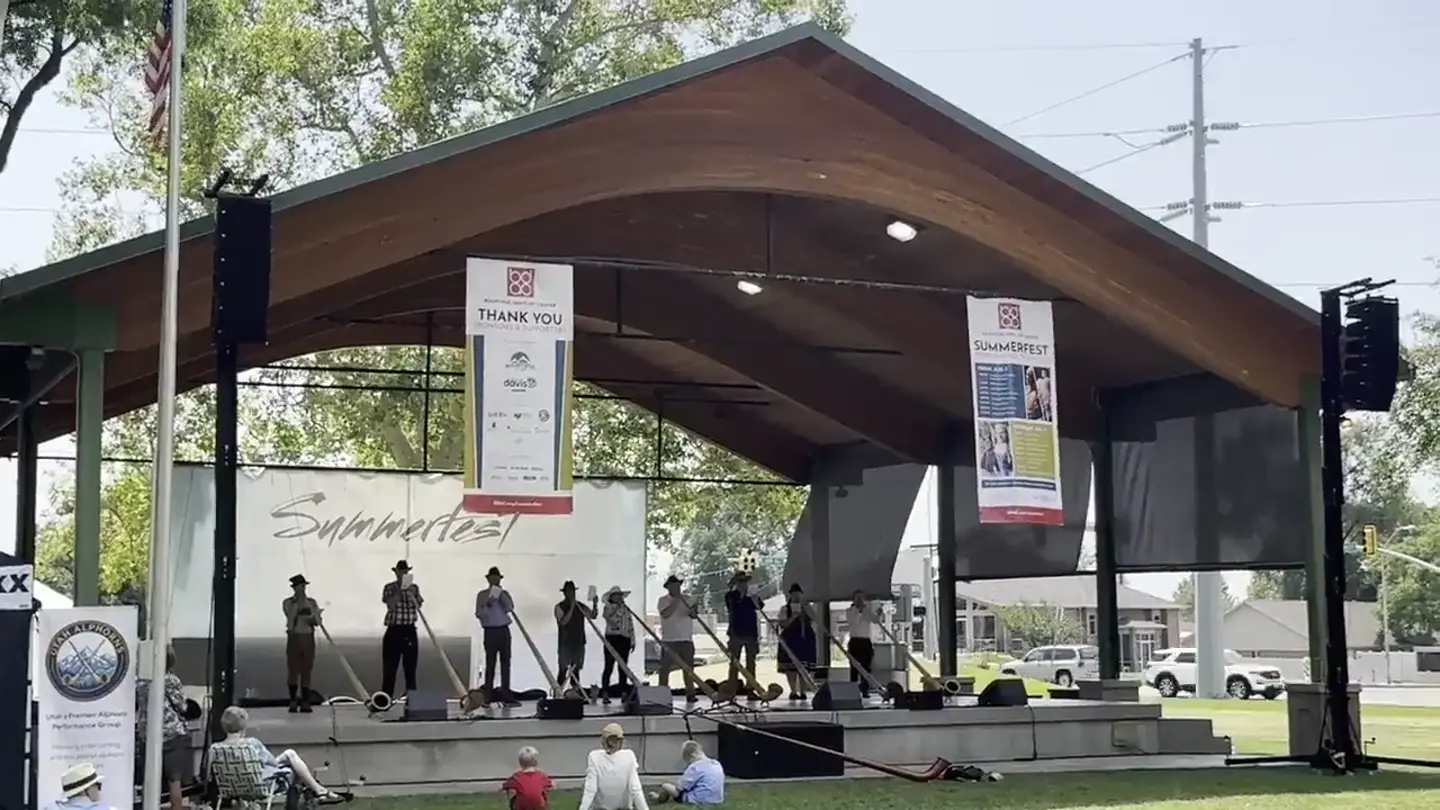
A guzheng, an ipu, a set of alphorns, a trombone in a nine-piece mariachi. These are not DI boxes and a vocal mic. They need the right capsule in the right place, at a level that respects an instrument built to be heard in a room rather than through a PA, and a gain structure set before the group walks on, not while they are playing.
Dancers Need the Opposite of the Audience
A dance group needs the music loud and rhythmically clear on the deck, because they are counting to it. The audience needs it musical and intelligible out front. Those are two different mixes off one source, and getting one right at the expense of the other is the single most common failure on a festival stage.
Playback Is a Real Input
Half the groups arrive with a track on a phone and no adapter. That input gets a proper DI, a tested cable and a level check like anything else, plus a backup path, because a dance troupe that has rehearsed for months should not be standing in silence while somebody hunts for a dongle.
The Work
Stages Run, Groups Mixed
All of this is one operator on one console, across festival stages, international showcases, powwows and multicultural weddings in Idaho and Utah. The same hands ran an event in Park City during Sundance in 2024, produced and promoted as well as mixed, fire dancer and all.
What Shows Up
Built for a Running Order, Not a Headliner
A Console With Scenes, Not Knobs
A digital console with a saved scene for every act on the running order, built from the input lists before load-in. Recalling a scene takes a second. Rebuilding a mix between groups takes four minutes you do not have.
Enough Inputs for the Whole Day
Thirty-two channels available so a nine-piece stays patched while a solo singer plugs in beside them. Wireless handhelds for the MC and the introductions, scanned in Shure Wireless Workbench so nothing drops when the park fills up.
Monitors Aimed at Dancers
Wedges positioned for people who are moving, not for a singer standing at a stand. Coverage out front designed for speech as well as music, because the introductions, the land acknowledgement and the group's own story are half of why the audience came.
How It Works
Three Steps to a Stage That Runs Itself
1. Send the Running Order
Groups, slot times, and whatever you know about each one. Half of them will not have an input list. That is normal, and it is my job to ask the right three questions rather than yours to chase them.
2. Scenes Built Before Load-In
Every act gets a channel layout and a starting mix before the truck is unpacked. Anything unusual, an instrument I have not mixed, a group bringing their own engineer, gets sorted in advance instead of in front of an audience.
3. One Person On It All Day
The same mixing engineer from the first group to the last. Not a sound tech who sets up and leaves, and not a different face after lunch who has never met the running order.
Common Questions
Cultural Festival Sound FAQ
Most of our groups will not send an input list. Is that a problem?
No, and it is expected. Community and cultural groups are volunteers, not touring acts. Send me the running order with a contact for each group and I will ask the two or three questions that actually matter: how many people make sound, do you bring your own music, and does anything need a chair or a table. That is enough to build a scene from.
We have fifteen acts and twenty-minute slots. Can changeovers keep up?
Yes, if the work is done beforehand. With a scene saved per act, the changeover is walking the next group on and recalling their layout. The stage plot matters more than the console: keeping a shared drum position, a shared playback input and a fixed set of vocal mics means most groups only move themselves.
Do you mic traditional and acoustic instruments?
Yes. Taiko, ipu and pahu, guzheng, alphorn, mariachi brass and strings, hand percussion. The approach is the same every time: the right microphone at a respectful distance, set before the group plays, then left alone. An instrument built to fill a room without amplification usually needs less than people expect.
Can you cover an outdoor park or festival grounds, not just a stage?
Yes. Open ground needs coverage designed rather than aimed, and past a certain distance it needs delay speakers so the back of the field hears the same show at the same time as the front. That is a site question, and it is worth walking the ground before the event rather than guessing from a map.
Do you work with a group that brings its own engineer?
Often. A visiting engineer gets a clean split, a clear patch and the information they need, and I stay out of their way. The festival still gets one person responsible for the stage across the whole day, which is the part that breaks when nobody owns it.
What does a cultural festival stage cost?
It depends on the size of the ground, how many inputs the running order needs and how many days. A single community stage is a different number from a multi-day festival with delay towers. Send the running order and the site and you will get a written quote, usually inside one business day, with every line itemized. Published rates for everything else are on the pricing page.
Got a Running Order and No Soundcheck?
Send the lineup and the site. Written quote usually inside one business day, itemized, with insurance paperwork ready before you ask.