- IDAHO · UTAH · ROAD, TRAIL AND CRIT
RACE & SPORTING EVENT SOUND
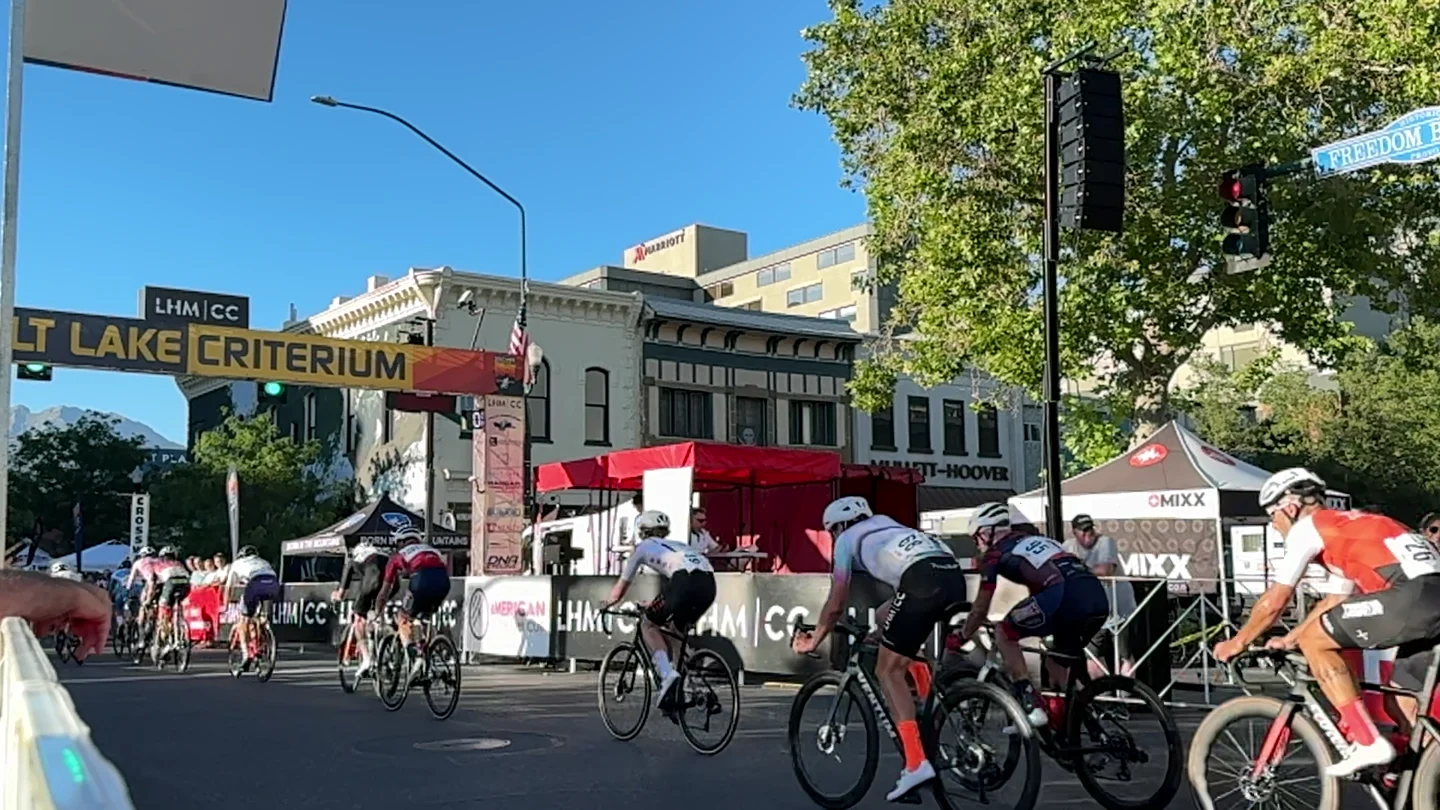
The start corral, the finish arch and the awards stand, all heard clearly, on a course with no power of its own. Criteriums, road races, trail runs, fun runs and tournaments.
Straight Answer
The Crowd Moves, and So Does the Thing Worth Watching
Every other kind of event puts the audience in front of a stage and keeps them there. A race does the opposite. People spread along a course, the field comes past in twenty seconds, and the moments that matter happen at the line, at a corner, and later at the awards stand. So the question is never how loud the system is. It is whether the announcer is intelligible at each of those places, whether there is power anywhere near them, and whether the whole thing is running before the volunteers show up in the dark. SwissMixx has been the sound on closed-street criteriums, parades and city races in Idaho and Utah for years, and every race quote starts with the course map rather than a package list.
Start Corral
Wave calls, heard
Finish Arch
Names on the line
Circuit Coverage
Delay-aligned
Power
Brought with us
On Site
Before the volunteers
Running a city event rather than a race? The city and festival vendor packet has the procurement side, and live event sound covers stages.
Why Race Sound Is Its Own Problem
A Course Is Not a Stage
Three things are true on race day that are not true at any other event, and they decide the whole design.
One System Will Not Reach
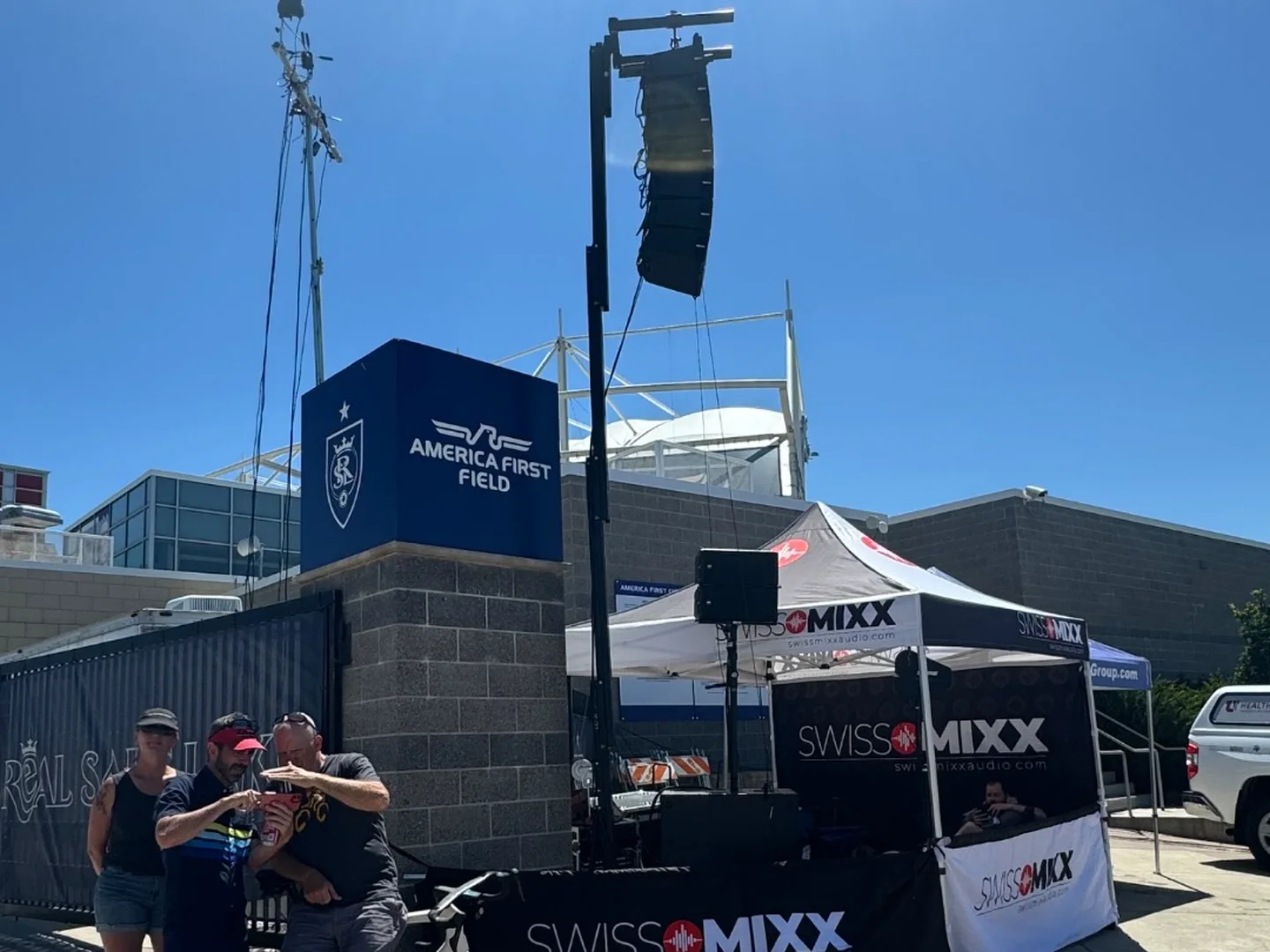
A criterium loop is several city blocks and a 5k finish area is longer than it looks. Turning a single stack up until the far corner hears it just punishes everyone near it. The answer is several smaller speakers placed where people actually stand, each delayed so its sound arrives in step with the others. A spectator halfway between two of them hears one clear voice, not a slap.
There Is No Outlet Where You Need One
Start corrals live in parks and on closed streets, and the useful spot is never near power. Remote and off-grid sites are routine here, so the power plan is drawn up alongside the speaker plan instead of being discovered on the morning. A generator is standard, sized to the rig and placed well away from the microphone and the corral. When the gun is early and the course runs past houses, a silent battery system is available as an add-on for the zones where noise matters.
The Announcer Is the Show
Music fills the gaps, but the reason the PA exists is a human voice calling waves, reading numbers off the timing feed and getting a name out before the runner is past. That means intelligibility over volume, a wireless handheld with a wired backup already on the table, and music that ducks automatically instead of someone reaching for a fader mid-sentence.
What Gets Covered
Three Sizes of Race Day
Most races land in one of these. The quote comes back flat and written once the course map and schedule are in hand, because a morning fun run and a two-day closed-street criterium are not the same job and pretending otherwise with a package price helps nobody.
MOST FUN RUNS AND 5Ks
Start and Finish
The two places everybody gathers, covered properly, with music in between so the corral does not stand in silence waiting for the gun.
- PA at the start corral and at the finish arch, power brought with it
- Wireless handheld for your announcer, wired backup on the table
- Music between waves, ducking under every announcement
- Set up and sound checked before volunteers arrive
- Same rig covers the awards once the finish line is quiet
CRITERIUMS AND CLOSED STREETS
Full Course Coverage
Distributed, delay-aligned speakers around the circuit so the call reaches turn three, the hot corner and the beer garden, not only the line.
- Speakers placed by where spectators actually stand, not by the map
- Each zone time-aligned so there is no echo between them
- Cable runs and power planned against the closure schedule
- Feed taken from your timing company for name and number calls
- An engineer on the console for the whole programme, not a drop-off
STAGE RACES AND TOURNAMENTS
Multi-Day and Expo
When the race is a weekend rather than a morning, and packet pickup, daily starts and an awards stand all need audio.
- Expo and packet pickup PA with a mic for announcements
- Start and finish coverage repeated each day
- Awards stand with wireless mics for presenters and sponsors
- Sponsor spots and playlists loaded and cued in advance
- Gear staged overnight so each morning is a power-up, not a build
Only need to rent the gear and run it yourself? The rental catalog has speakers and wireless mics, and delivery anywhere in the Treasure Valley is $250 each way.
How It Works
Three Steps to a Race That Can Be Heard
Send the Course Map
The map, the schedule with wave times, the expected head count and who is announcing. That is enough for a flat written quote, plus a W-9 and certificate of insurance for the permit file if the city wants one.
Walk It Before Race Week
Where spectators actually gather is rarely where the map suggests. A walk of the course settles speaker positions, power, cable routes and how the timing feed gets to the console, while there is still time to change something.
Built Before Daylight
Load-in happens against the closure, not against the gun. Everything is up, aligned and sound checked before the first volunteer arrives, and an engineer stays on the console through the last award.
City and Permit Ready
Closed Streets Are Familiar Ground
Criteriums, parades and city celebrations have been a steady part of the work for years, which means the parts organizers worry about are routine here: coordinating with a street closure, keeping cable out of a race line, getting a system up in the dark, and having the paperwork a permit office asks for ready before anyone chases it.
Insured, with W-9 and certificate of insurance same day
Flat written quote from the course map, no hourly surprises
Well versed in remote and off-grid courses, power planned and brought
Backup microphone and speaker on every job, rain or shine
Service Area
Idaho and Utah Race Calendars
Road races, criteriums, trail runs, fun runs and tournaments across the Treasure Valley, Nampa, Boise, Meridian, Caldwell, Eagle, Star and Kuna, and north into Utah along the Wasatch Front. The shop is in Nampa, so Idaho dates book fastest, and Utah race weekends are planned as travel dates.
Common Questions
Race and Sporting Event FAQ
At a festival the audience stands still in front of the stage. At a race the audience is spread along a course and the thing worth hearing moves. That changes the whole design. Instead of one loud system pointed at a crowd, a race needs coverage at the places people actually gather, the start corral, the finish arch, the awards stand, and on a criterium circuit often two or three points around the loop, time-aligned so a spectator between speakers hears one voice rather than an echo. The announcer, not the music, is the main input, so intelligibility beats volume every time.
SwissMixx provides the sound system and the engineer running it. Most race organizers already have an announcer, a board member, a race director or a hired voice, and that person gets a wireless handheld plus a wired backup on the table. If you do not have an announcer yet, say so early and SwissMixx can point you at someone local who does it well.
That is the normal case, not the exception, and remote or off-grid sites are routine work here. A start corral in a park or on a closed street rarely has an outlet anywhere useful, so power is part of what gets planned and brought, not something discovered on the morning. A generator is standard, sized to the rig and placed well away from the microphone and the corral so the engine is not underneath every announcement. When the gun is early and the course runs past houses, a silent battery system is available as an add-on for the zones where noise matters most.
Yes, with distributed speakers rather than one big stack. A crit circuit is usually a few city blocks, and one system at the finish line simply does not reach the far corners. The fix is smaller speakers placed around the loop and delayed so the sound from each one arrives in step with the others. Spectators at turn three hear the same call as the people at the line, and nobody stands in a spot where two speakers fight each other.
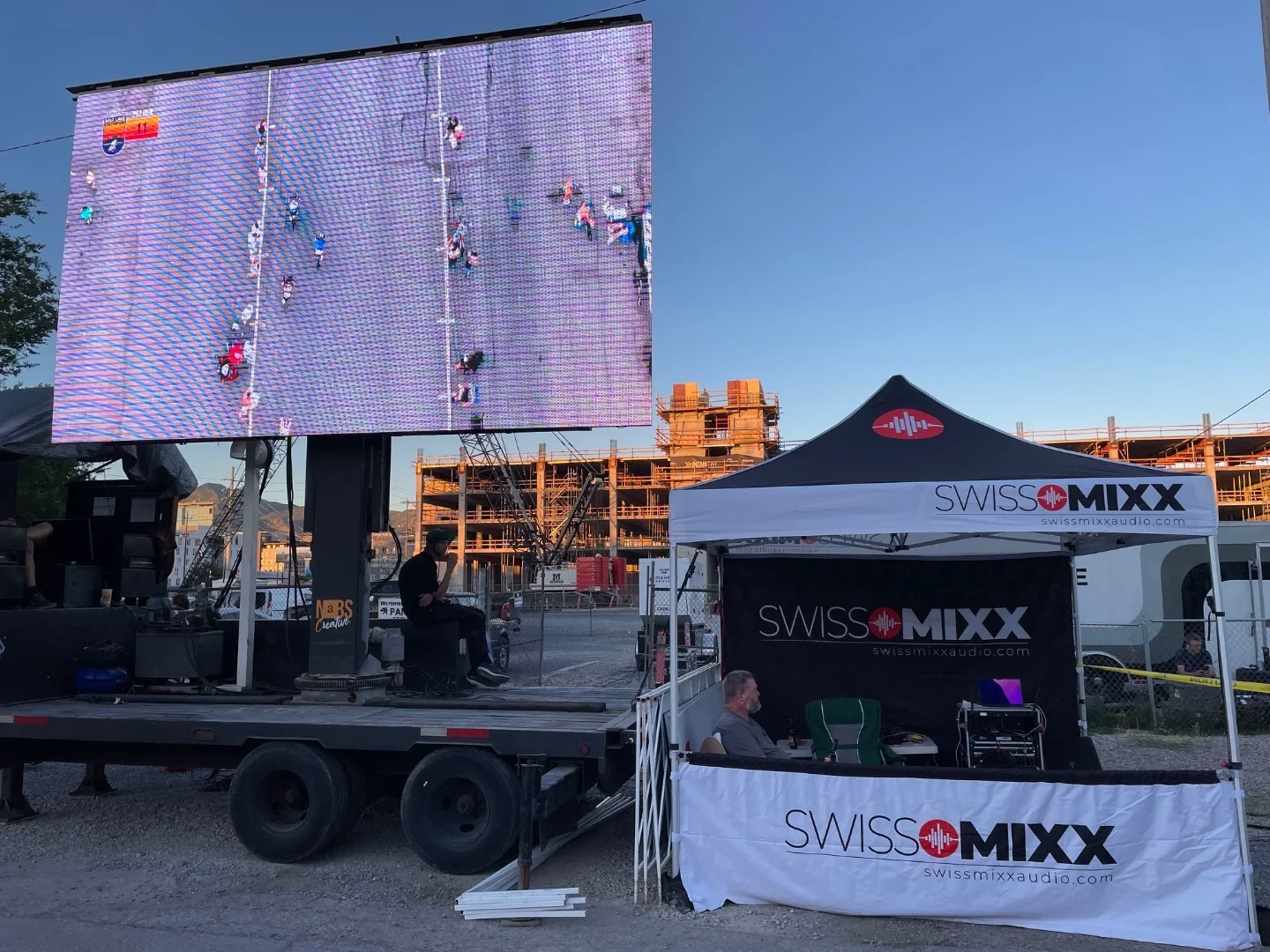
Yes. Timing systems that call names or numbers as runners cross, and scoreboard or video feeds at a tournament, are just another input to the console. Bring the timing crew into the conversation before race day so the handoff is a known cable and a known level rather than something figured out at 6 a.m. with the first wave already lining up.
Races run in weather that would cancel a concert, so the rig is planned for it. Speakers go under cover or in rain jackets, the console and any laptop live under a tent with the cables dressed so water does not track down them, and there is a spare wireless handheld and a wired microphone in the case. The one thing weather does change is load-in timing, so a wet forecast usually means arriving earlier, not making a call on the morning.
Set up and sound checked before the volunteers arrive, which for a typical 7 or 8 a.m. gun means on site well before daylight. A start and finish setup takes about an hour once the course is accessible. A full circuit with delay zones takes longer and usually wants street closure the night before or very early access, which is worth sorting with the city when the permit is filed rather than the week of.
Yes, same day. Race permits usually run through a city parks or special events office, and a certificate of insurance and W-9 are ready to send as soon as you ask, along with a flat written quote. SwissMixx works with city departments and festival organizers across Idaho and Utah regularly, so the paperwork side is routine.
It depends almost entirely on how much of the course has to be covered and for how long, which is why the quote comes after seeing the course map rather than before. A start and finish setup for a morning fun run is a fraction of a full criterium circuit with delay zones and a two day schedule. Send the map, the schedule and the expected head count and a flat written quote comes back, no hourly surprises.
Race on the Calendar?
Send the course map and the schedule. A flat written quote comes back the same day, with the insurance paperwork your permit office will ask for.