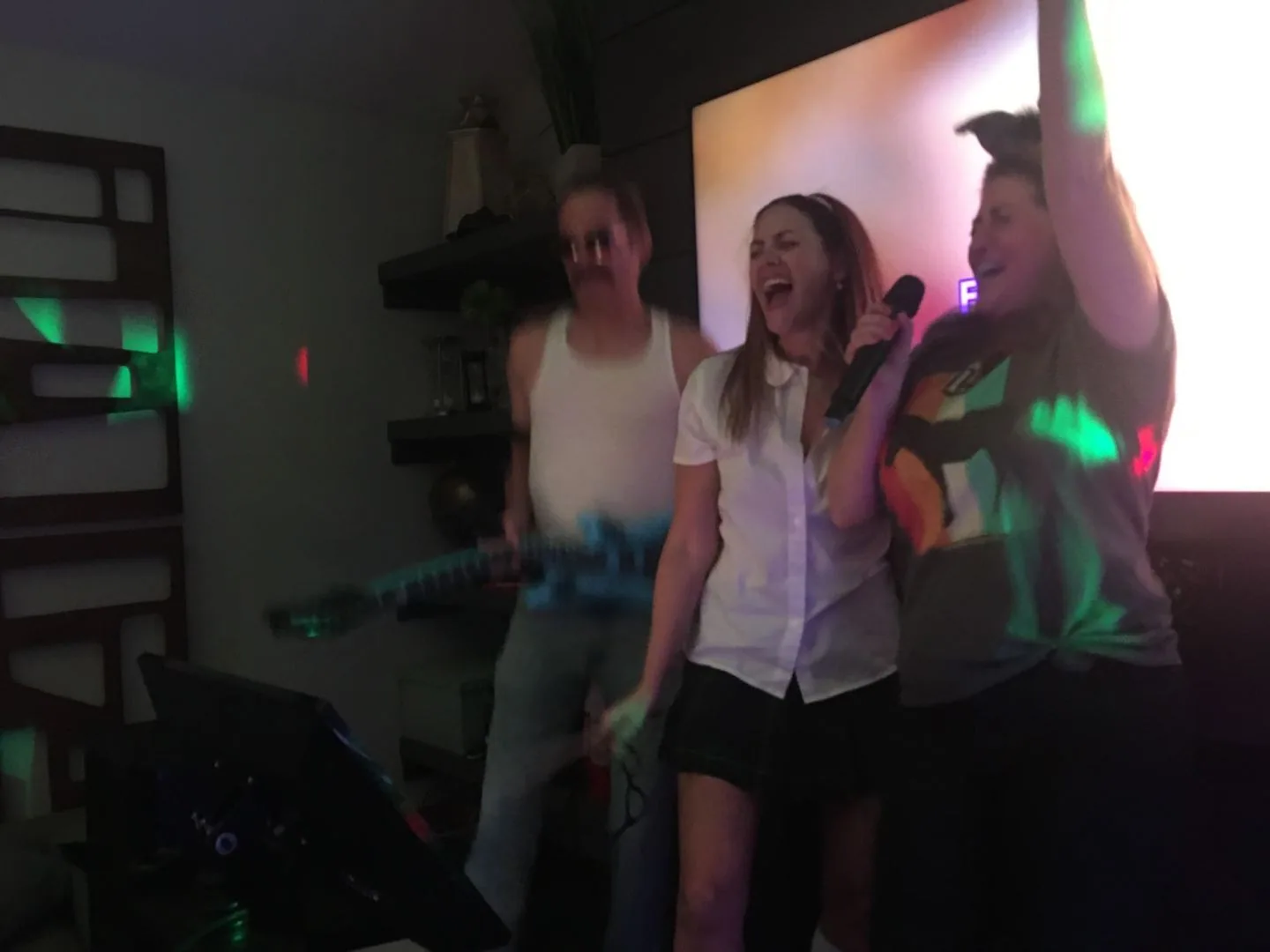
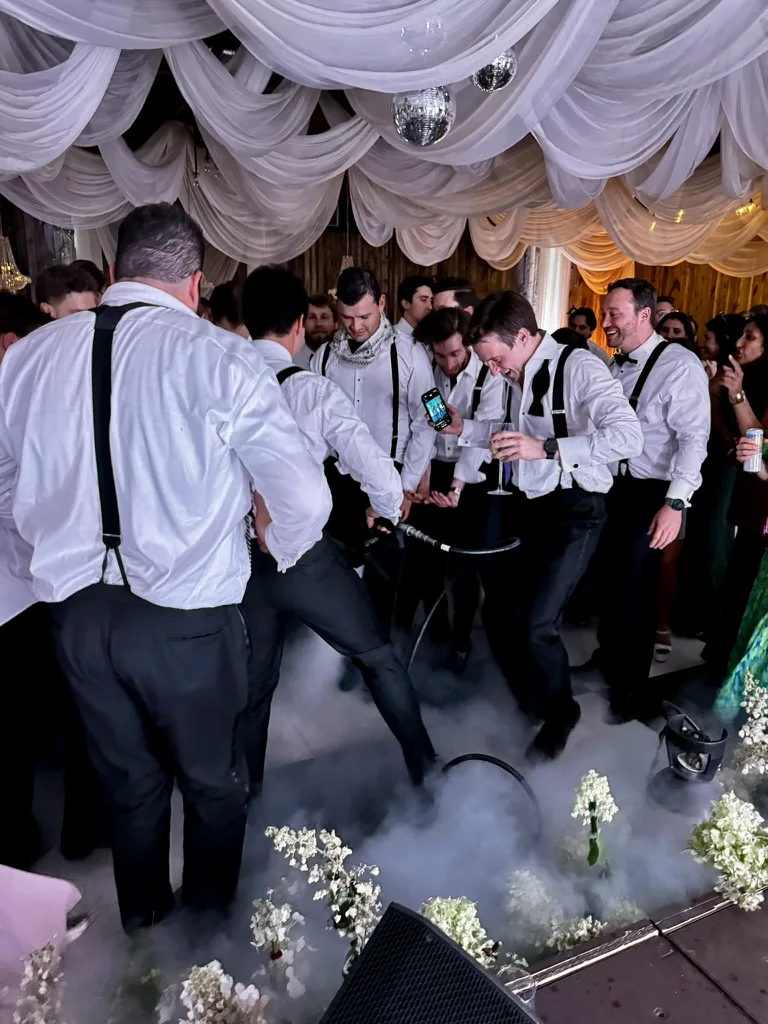
The first time most people see a silent disco, the room looks wrong. A full dance floor, everyone moving, and the loudest thing in the space is laughter. Then someone hands you a headset, you press the button, and the whole night makes sense in about four seconds.
I run silent discos across the Treasure Valley and beyond, from backyard receptions to city events, and the questions I get are almost always the same three. How does it actually work? Is it right for my event? And what does it cost? Here are the real answers.
What Is Actually Happening
A silent disco replaces the speaker system with wireless headsets. Up to three transmitters sit at the DJ table, and each one broadcasts its own audio channel to every headset in the venue. Each channel can carry whatever you want: a live DJ, a curated playlist, a second DJ playing a completely different genre, or three separate presentations running in the same room at the same time. At a small corporate event you could have karaoke in one corner, bingo in another and a dance party in the middle. The possibilities are only limited by your imagination.
Every guest wears a wireless LED headset with two controls that matter: a channel button and a volume knob. Slide the switch and you jump from channel to channel. The LED on each ear cup changes color to match, red, green, or blue, so you can see at a glance which channel every person in the room is listening to.
That color feedback is not a gimmick. It is the engine of the whole night. When the red channel drops a song the crowd loves, you watch the room turn red in real time. Channels compete. Guests campaign for their side. A good silent disco has a scoreboard built into it: count how many headsets are glowing each channel's color, and the DJs can see exactly when they are winning.
There is one more thing people do not expect until they are standing in it. Slide the headset off and you are in a quiet room. Guests hold real conversations at normal volume three feet from the dance floor, which never happens at a regular dance. Grandparents stay past nine. Nobody shouts over the music, because there is no music to shout over.
Speakers or Headsets: The Honest Comparison
A silent disco is not better than a PA. It is better at certain jobs and worse at others, and knowing which is which will save you money in both directions.
| Your situation | Better call | Why |
|---|---|---|
| Venue has noise limits or a music curfew | Headsets | The party keeps going after the speakers would have to shut down. Zero noise complaints. |
| Outdoor space where amplified sound is restricted | Headsets | Parks, rooftops, and neighborhoods that would never approve a PA will host a silent disco without blinking. |
| One program everyone must hear at once: ceremony, speeches, auction | Speakers | You cannot guarantee every guest is wearing a headset at the moment that matters. |
| Crowd split across generations or genres | Headsets | Three channels means country, top 40, and throwbacks run all night. Nobody waits for their song. |
| Small party, simple night, tight budget | Speakers | A rented speaker is cheaper and needs no handout table. That said, small-party silent discos do happen, and with the right group of friends they are a total blast. Headsets earn their cost as the guest count and the restrictions grow. |
| Two events sharing one building | Headsets | Your dance floor makes no sound, so the meeting next door never knows you are there. |
The Hybrid Move That Wins Weddings
The best silent disco booking I see is not headsets all night. It is a normal reception on a regular sound system through dinner, toasts, and the first dance, then a switch to headsets when the venue's quiet hours kick in. The couple gets the ceremony and speeches through speakers, where they belong, and the dance floor gets two or three extra hours the venue would otherwise have taken away.
If your venue contract has a music cutoff at nine or ten, that clause is not the end of the party. It is the start of the second one. Just make sure to talk it through with your venue first, since every venue handles quiet hours, end times and headsets a little differently.
What It Costs
My silent disco pricing is published, like everything else on this site. Packages run $850 for up to 100 headsets, $2,100 for up to 300, and $4,500 for the full fleet of up to 750, one of the biggest headset inventories in the region.
Channels work like this: every package includes one music channel, and you earn a free channel with every 100 headsets. Extra channels are $40 each, up to the full 3-channel, 3-color experience. A channel can run a playlist you build, or a live DJ can take it over for $850 per channel. Two DJs battling for the crowd on separate channels is the version people talk about for years.
The silent disco page has a calculator: slide the headset count, pick your channels and DJs, and the price is right there.
Price Your Silent DiscoThe Planning Numbers Nobody Tells You
Count everyone, not just the dancers. This is the mistake I see most. Headsets get traded around all night. The uncle who swore he would not dance wants one by nine o'clock, because standing in a silent room while everyone else laughs at a song you cannot hear is unbearable. Order for the guest list, not for the dance floor estimate.
Plan the handout and the collection. Headsets go out at a table and come back to the same table. Give that job to a person, not to hope. On larger events I handle delivery, setup, and on-site support, and for city-scale events the full fleet package includes operation, because at 750 headsets the logistics are the show. Either way, we work through the logistics with you ahead of time: where the handout tables go, who staffs them, and how headsets get collected at the end. For city events, the host typically provides the tables and the volunteers who hand out and collect the headsets.
Give the channels identities. The nights that work best name their channels up front: red is country, green is top 40, blue is the throwback channel. Guests learn the colors in minutes and the switching becomes part of the fun.
If you are still deciding between a speaker rental and headsets, my speaker rental guide covers the other side of this decision, and the rental catalog has every published rate. For a wedding under quiet hours, ask your venue one question first: what time does amplified music have to stop? The answer usually makes this choice for you.