A lot of couples don't want or need a full wedding DJ. Maybe you've got a playlist you love, a friend willing to run it, or you just want to keep the budget for something else. That's a completely reasonable call, as long as the gear is right. Here's what actually matters at each phase of the day, and what you can skip without anyone noticing.
Ceremony: Keep It Simple
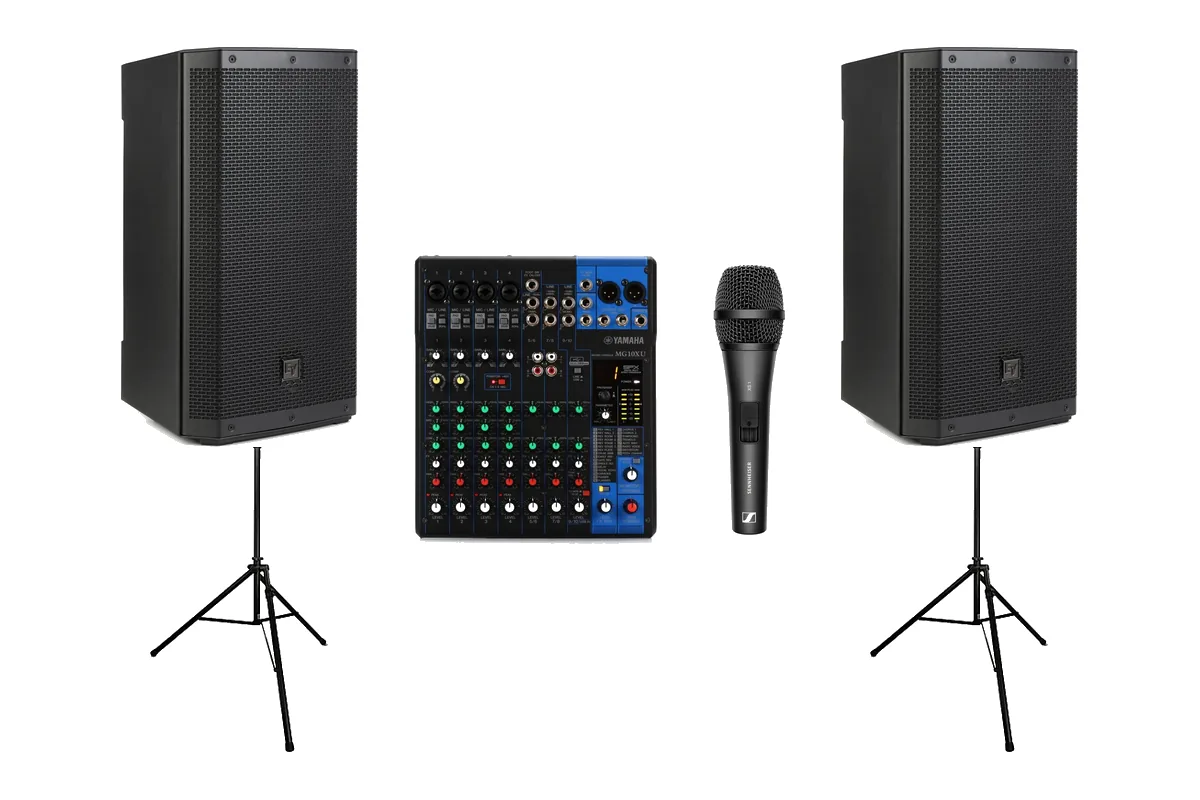
For vows and readings, you need one powered speaker and one wireless mic, nothing more. The speaker projects your officiant and the couple's vows to the back row, and the wireless mic means nobody's tethered to a stand. If there's a second reader or a duet, add a second mic, otherwise skip it, one is plenty for most ceremonies.
Cocktail Hour: Background, Not a Show
This is the one phase where you genuinely don't need much. A Bluetooth or AUX connection into the same speaker, playing a background playlist off a phone, does the job. Nobody's listening critically during cocktail hour, they're mingling. Don't overspend on gear here, it's the easiest phase to keep minimal.
Reception and Dance Floor: Where Coverage Matters Most
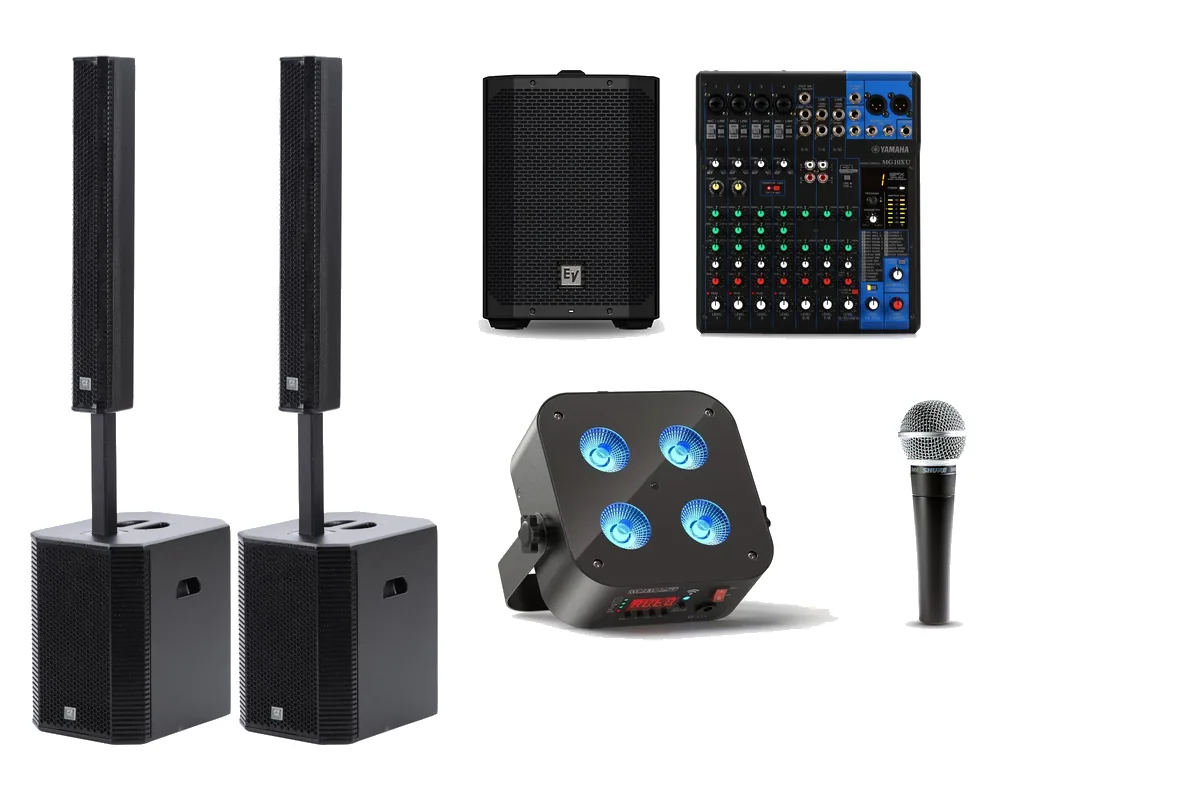
This is where most DIY setups either work great or fall apart. A crowded reception with dancing needs more coverage than a single speaker can give, both because the room fills with people who absorb sound, and because a dance floor genuinely needs low-end presence to feel good. A column array or a second speaker, plus some uplighting to make the room feel like an event and not a gym, is the difference between a flat night and one that actually feels like a wedding.
DIY wedding kits are built around exactly these three phases, from a $249 ceremony-only kit up to an $899 full weekend kit with two column arrays, a battery speaker and four wireless uplights.
See DIY Bride PackagesWhat You Can Skip
A second wireless mic, unless you have two readers or a ceremony where the officiant and couple are going back and forth (so nobody's passing one mic back and forth mid-vow). A subwoofer, for most receptions under 150 guests a column array or two speakers already has enough low end. Uplighting, it helps the room feel finished but it's not going to make or break the sound, treat it as a nice-to-have if the budget allows it, not a requirement.
When DIY Stops Making Sense
Here's the honest version, since I'd rather tell you this upfront than have it go sideways at your reception. The gear side of DIY is easy, playback from a phone is playback from a phone. What's harder is that nobody's actually watching the sound during the wedding, because everyone including whoever you handed the laptop to is also a guest at your own wedding. If a mic cuts out mid-vow or feedback screeches through cocktail hour, there's no one dedicated to catching it in time.
If that risk bothers you more than the price of a full DJ does, adding a SwissMixx technician to any DIY kit for a flat $950 solves exactly that problem, real gear, and someone else responsible for running it, while you're actually at your own wedding instead of babysitting a mixer. A full wedding DJ, who also MCs and curates the reception live, starts at $2,500 for reception only and runs to $5,750 for a full day. The DIY-plus-tech route lands at roughly a third of full DJ pricing without the MCing.