I get this question almost every day: "how big of a speaker do I need?" It usually comes from someone renting for the first time, whether it's a backyard birthday, a graduation party, a block party, or a family reunion, and it's almost always followed by a nervous "I don't want it to be too quiet, but I also don't want to overdo it." Good news: sizing a DIY sound system is a lot simpler than it sounds, once you stop thinking in watts and start thinking in guest count.
Start With Guest Count, Not Wattage
Every rental catalog online will throw watt numbers at you like they mean something on their own. They don't, not without knowing the room. A 1000-watt speaker in a small backyard is overkill, and the same speaker outdoors with 200 people spread across a field might struggle. What actually matters is headcount and whether you're indoors or outdoors. That's it. That's the whole formula.
The Simple Sizing Chart
- Under 100 guests, indoors: one powered 12-inch speaker on a stand is usually plenty for music and a mic.
- Under 100 guests, outdoors, or over 100 guests indoors: plan on two speakers. Sound dissipates fast outside with nothing to bounce off of, so a single speaker that felt loud indoors will feel thin outdoors.
- 150 to 300 guests outdoors: four speakers, or a compact column array, spread so the whole crowd gets direct sound instead of everyone straining toward one corner.
- 300+ guests, or a real festival-style layout: this is where a proper line array system earns its keep. It's the same idea, just built for distance and crowd width rather than a backyard.
Every speaker in the catalog lists a day rate and a weekend rate. PA speakers start at $72 for the weekend, pick up free in Nampa, or add delivery.
See PA Speaker Rental PricesIndoors vs. Outdoors Changes the Math
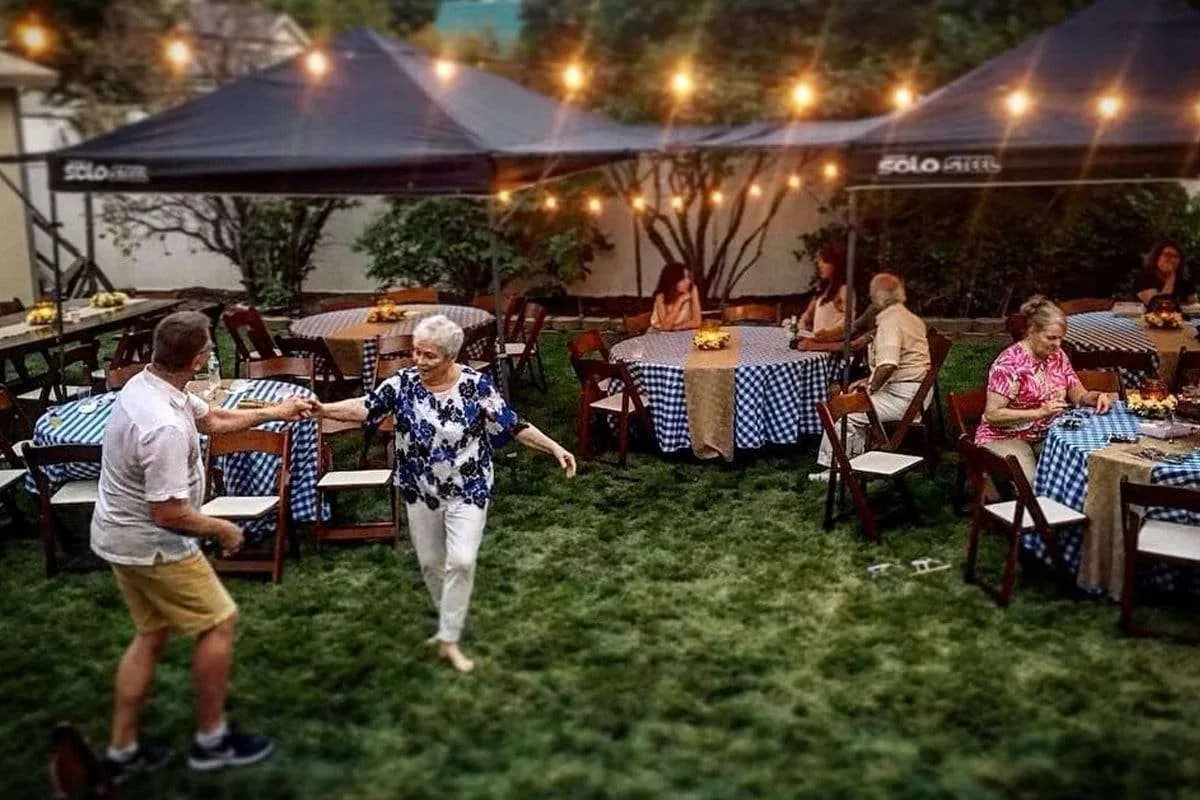
A living room, garage, or church hall has walls and a ceiling helping the sound along. A backyard, a park pavilion, or a gravel lot has none of that. Outdoor sound just disappears past a certain distance instead of reflecting back toward the crowd, which is why the same guest count needs more coverage outside than in. If your event moves between the two, like a ceremony on the lawn followed by a reception in a tent, size for whichever half is outdoors.
Why "Just Get a Bigger Speaker" Is the Wrong Instinct
The instinct when you're not sure is to rent the biggest single speaker available. That usually backfires. One oversized speaker blasts the people standing near it and leaves the back of the crowd straining, because a speaker throws a cone of sound, not a ball of it, coverage is a spread problem, not a volume problem. Two mid-size speakers, positioned on either side of the space, cover a crowd far more evenly than one big speaker cranked up to compensate. This is the same logic a full production system uses at a festival, just scaled down to backyard size.
Why Stacking More Speakers Doesn't Just Stack More Sound
Here's the other instinct that gets people in trouble, the opposite of the "one giant speaker" mistake: grabbing two or three speakers and clustering them right next to each other, or stacking them on top of one another, playing the exact same signal, thinking it'll just add up to more volume. It doesn't work that way, and it can actually make things sound worse.
When two speakers play the same sound and you're standing somewhere those sound waves arrive even slightly out of step with each other, they don't just combine, they start canceling each other out in spots. You'll hear it as a hollow, thin, almost underwater quality to the sound, or you'll walk a few feet and the music suddenly drops out or gets weirdly bass-heavy, then comes back a few steps later. Audio guys call it comb filtering. You don't need the name for it, you just need to know it's a real thing that happens the moment you stack speakers too close together instead of spacing them apart. The same physics is why two stacks sound worse than one in an arena.
This is different from the spread-them-out approach in the sizing chart above. Positioning two speakers on opposite sides of a yard to cover more ground works great, because each guest is really only hearing one speaker clearly at a time. Piling speakers together to make one spot louder is what causes the problem. If a space genuinely needs more volume and more speakers, it comes down to where they're placed and where each one's cone lands, not how many you can fit in one corner. That spacing and angling is most of what you're actually paying for with a proper line array system, it's engineered so the speakers reinforce each other instead of fighting.
If you're not sure whether your setup needs two speakers spread apart or something bigger, that's an easy text or call before your event instead of a guess on the day of.
Music, Speeches, or Both?
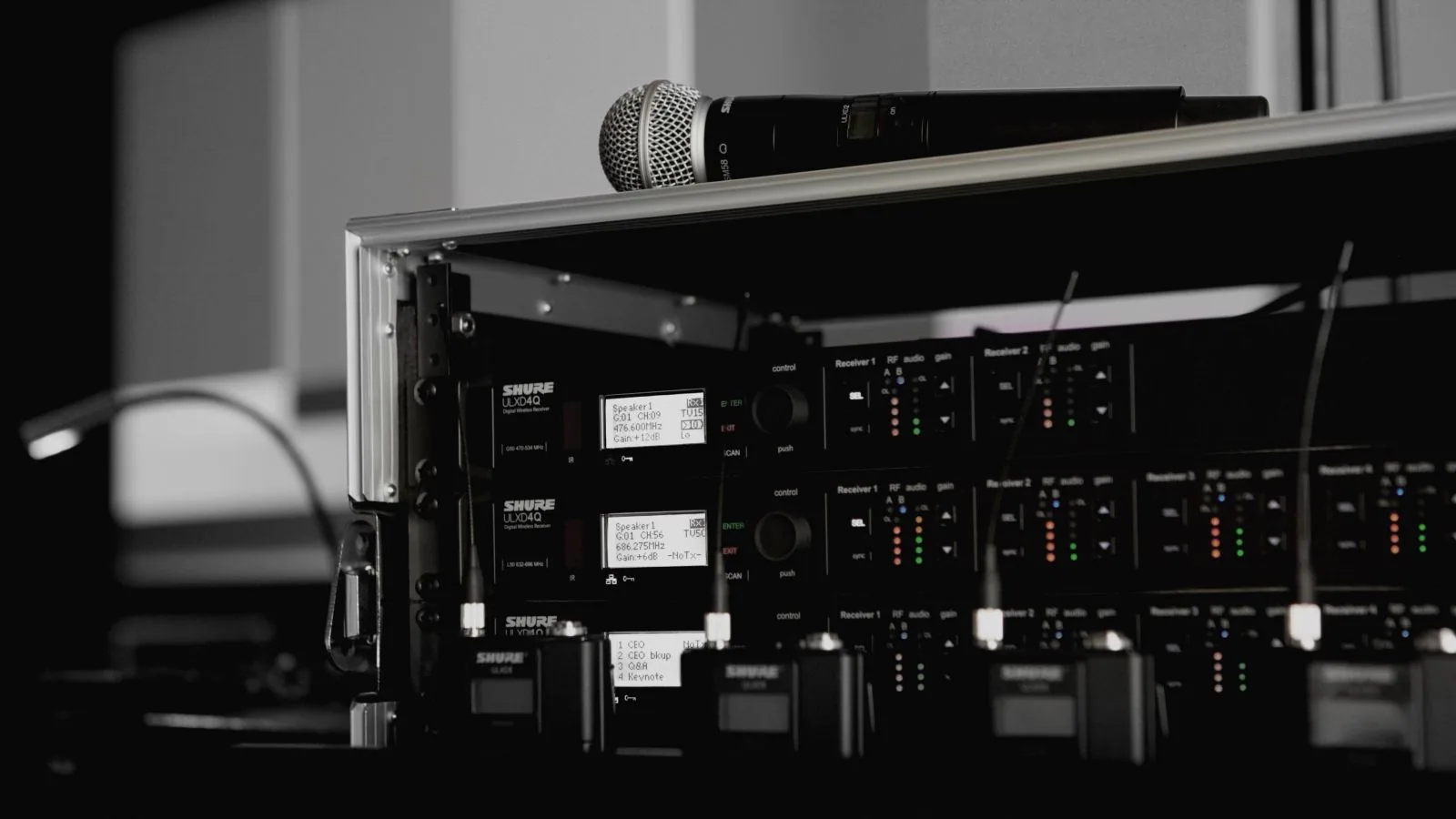
If it's mostly speeches, toasts, or announcements, coverage matters more than punch, you want every seat to hear clearly, not feel bass. If there's dancing or a DJ involved, you'll want a bit more headroom so the low end doesn't get muddy once the crowd fills in and starts absorbing sound. Either way, a wireless mic is worth adding even to a small setup. Renting one runs from $72 for the weekend, and it means whoever's talking doesn't have to hover next to a fixed microphone.
If you're still not sure after reading this, that's what I'm here for. Tell me your guest count, indoor or outdoor, and whether there's music or just talking (the same three questions I ask everyone), and I'll tell you exactly what to rent instead of you guessing and either overpaying or running short.