If you've priced a wedding DJ before, you already have a mental model for this. A few package tiers, a price per hour of coverage, done. Corporate events, festivals, rodeos, and city gigs don't work that way, and almost every planner who calls me for the first time is a little surprised there isn't a menu.
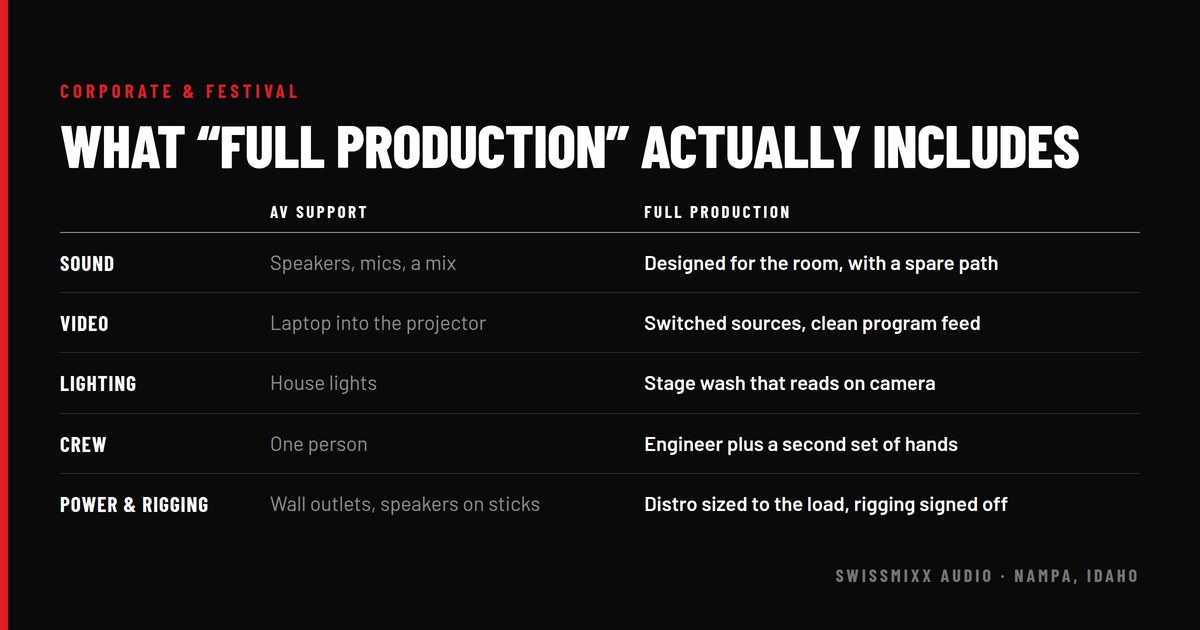
Here's the honest answer: the price isn't set by what kind of event it is. It's set by five things that have nothing to do with the event's name.
It's Not the Event Type. It's What's Actually Involved.
A corporate keynote in a hotel ballroom and a corporate keynote in a 400-person tent look identical on a request form and cost nothing alike to run. Here's what actually moves the number.
1. How Many Mics and Inputs
One lapel mic and a laptop for slides is a different job than a six-person panel, a Q&A runner mic, and a musical act between sessions. Every input is a channel on the board, and often another mic in someone's hand or on a stand.
2. How Much Area the Sound Has to Cover
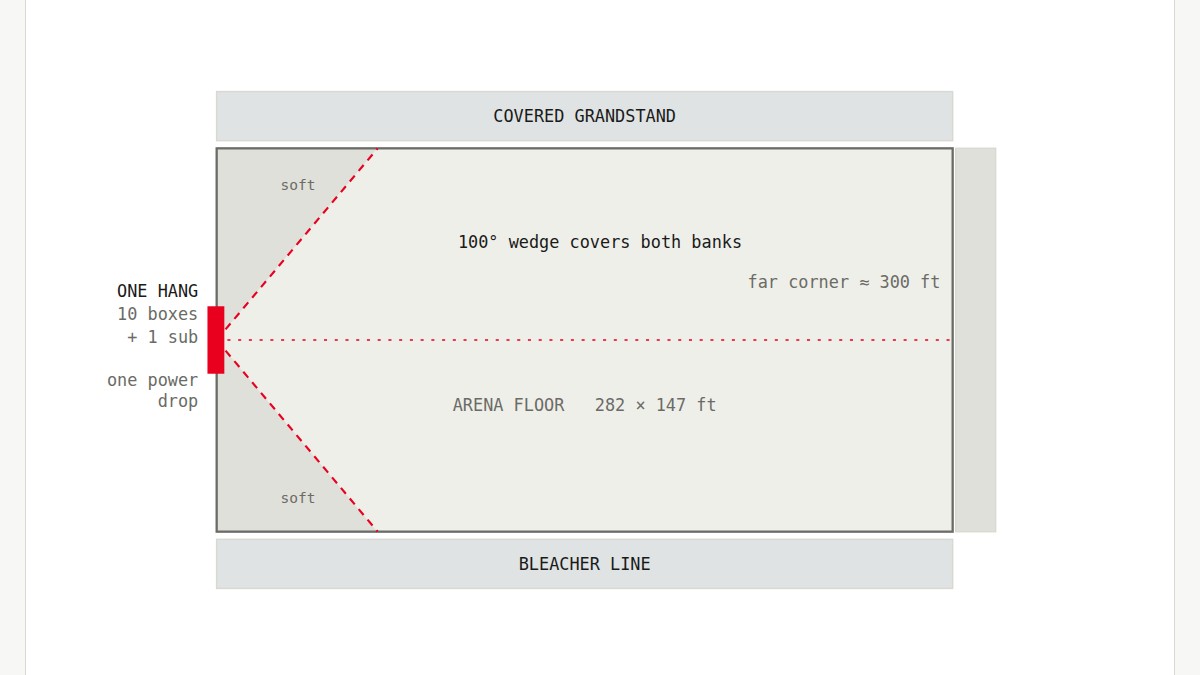
A conference room and a rodeo grandstand aren't the same problem scaled up. They're different problems. More square footage doesn't automatically mean "bigger speaker." Sometimes it means a second speaker position with its own timing, and getting that wrong is the difference between clean sound and an echo nobody can fix once the show has started. Coverage area is usually the single biggest driver of cost on an outdoor job, more than headcount.
3. Who's Actually Running It
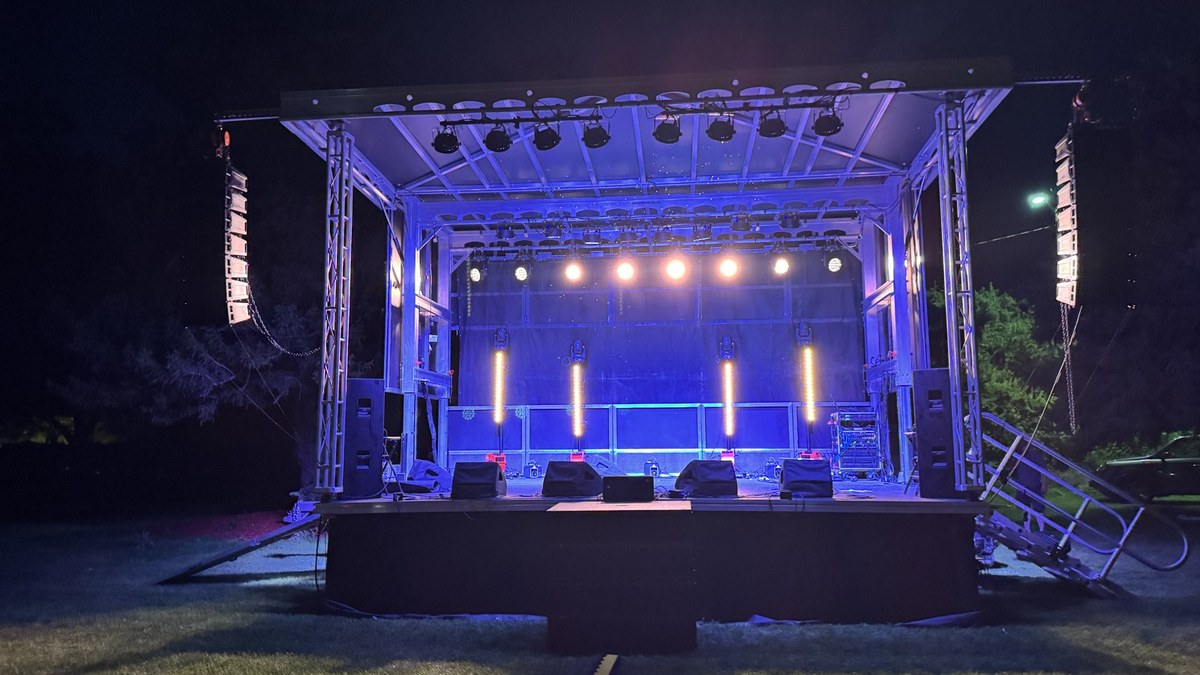
One operator behind a board is one price. A festival with staging, lighting, and a stage manager coordinating five acts across a day is a production crew, not an operator, and every person on a crew like that runs their own equipment and their own piece of the show. That's not an upsell. It's just what the job requires once there's more happening than one person can watch at the same time.
4. How Long, and When
A one-hour ribbon cutting and a three-day festival with early load-in and a late strike aren't priced the same even if the gear list looks similar, because you're paying for the crew's day as much as you're paying for the gear.
5. What the Site Actually Gives You
Power, load-in access, permits, distance. A tailgate with a generator fifty feet from the tent is a different quote than the same event running off a single extension cord through a hotel loading dock. The outlet you actually have on site decides more of this than most planners expect, and it's worth a photo of the panel or the plug before I quote anything with real power needs.
What This Looks Like in Real Numbers
I publish every price I can on the rentals page instead of making people call for a range, so here's what a few of the actual building blocks run. A self-run DIY kit (a battery-powered speaker and a wireless mic) is $249, single day or the whole weekend. Silent disco starts at $850 for up to 100 headsets. A full-production wedding, for comparison since it's the number most people already know, runs $2,500 to $5,750 depending on coverage.
None of those is a corporate or festival quote by itself. They're the parts a bigger quote gets built from. That's the real answer to "how much does it cost": there isn't one number, there's a list of what your event actually needs, priced item by item, the same way the rentals page is priced.
Every rental on the site is priced the same way, item by item, nothing hidden behind a "call for pricing" link.
See Published Rental PricesWhat I'll Ask You
To get you an accurate number fast instead of a guess, I'll want to know:
- Roughly how many people, and indoor or outdoor
- How many people need a mic, and what kind (podium, handheld, lapel)
- What power is actually available where the gear sets up
- Load-in window and strike time, and whether it's a single day or multi-day
- Whether anyone needs a recording or a livestream feed off the board
Answer those and I can usually put a real, specific price in front of you the same day rather than a range that doesn't mean anything yet.